Beyond Forgiveness: When History Itself Needs Redemption
August 30, 2025
Have you ever spilled wine on a brand-new carpet? Stanley Steamer can come, clean the spots, and restore everything to…

Which is more important, winning the Super Bowl or the parade celebrating that victory? Fans love both, but you will universally hear the response that winning the Super Bowl is more important. Good Friday is winning the Super Bowl, and Easter is the parade that celebrates that victory. God loves his “Good Friday” Christ, and image of Himself so much, that He resurrects it from the dead and ascends it into heaven giving it divine sanctioning, eternal authority, and universal distribution as the substance that rules all heaven and earth. The throne upon which God sits is the cross, and the crown that he wears is made of thorns.
This sports analogy cuts through centuries of theological debate with startling clarity. We’ve become so accustomed to treating Good Friday and Easter as separate, almost competing events in the Christian calendar, that we’ve lost sight of what they truly represent: a single, unified divine action. The Super Bowl metaphor helps us understand that while the victory parade is glorious and celebratory, it only exists because of the game that was won. Yet here’s the profound twist: in God’s economy, the victory is the crucifixion itself. The parade doesn’t celebrate something different from the cross—it celebrates the cross.
Easter is so important because it reestablishes the undeniable love affair that God has with His eternal image of Himself. God looks in the mirror, and He loves His smile. There’s no surprise there, but the surprise comes when we see what He looks like. Crucifixion is the condition of the man who is God who rules in eternity, and no one is ashamed of the cross because it is the love and power of God. Easter is the parade that celebrates the great victory.
The image of God having a “cruciform smile” is both beautiful and disturbing—exactly as it should be. We’re so trained to think of God’s glory in terms of power, majesty, and transcendence that the idea of God’s eternal self-image being cruciform seems almost blasphemous. Yet this is precisely what Easter announces to the cosmos: the Resurrection doesn’t replace the crucifixion or move past it; it confirms it, celebrates it, and broadcasts it as the eternal nature of divine reality. When God looks at Himself in the mirror of eternity, He sees nail-pierced hands. This isn’t a temporary condition from a weekend in first-century Jerusalem—this is who God eternally is.
Is Christianity founded upon the cross of Christ or is it founded upon the Resurrection? That either-or question is like asking is it more important to achieve something or to celebrate that achievement? Is it more important to get married or to celebrate your marriage? Is it more important to design and build the greatest cathedral or to then live in, occupy, and worship in that cathedral celebrating its existence? The list of such examples is endless where you pit the achievement or accomplishment of something against the enduring eternal celebration of that something? The Cross is the something, and Easter is its eternal celebration.
These analogies multiply and reinforce each other, driving home a point: you cannot separate the cross from the Resurrection without clouding the meaning of both. The wedding ceremony is meaningless without the marriage that follows; the marriage celebration is impossible without the vows that preceded it. Yet we’ve somehow convinced ourselves that we must choose between Good Friday theology and Easter theology, between a religion of the cross and a religion of the empty tomb. This is a false dichotomy that fractures the unified event of God’s self-revelation.
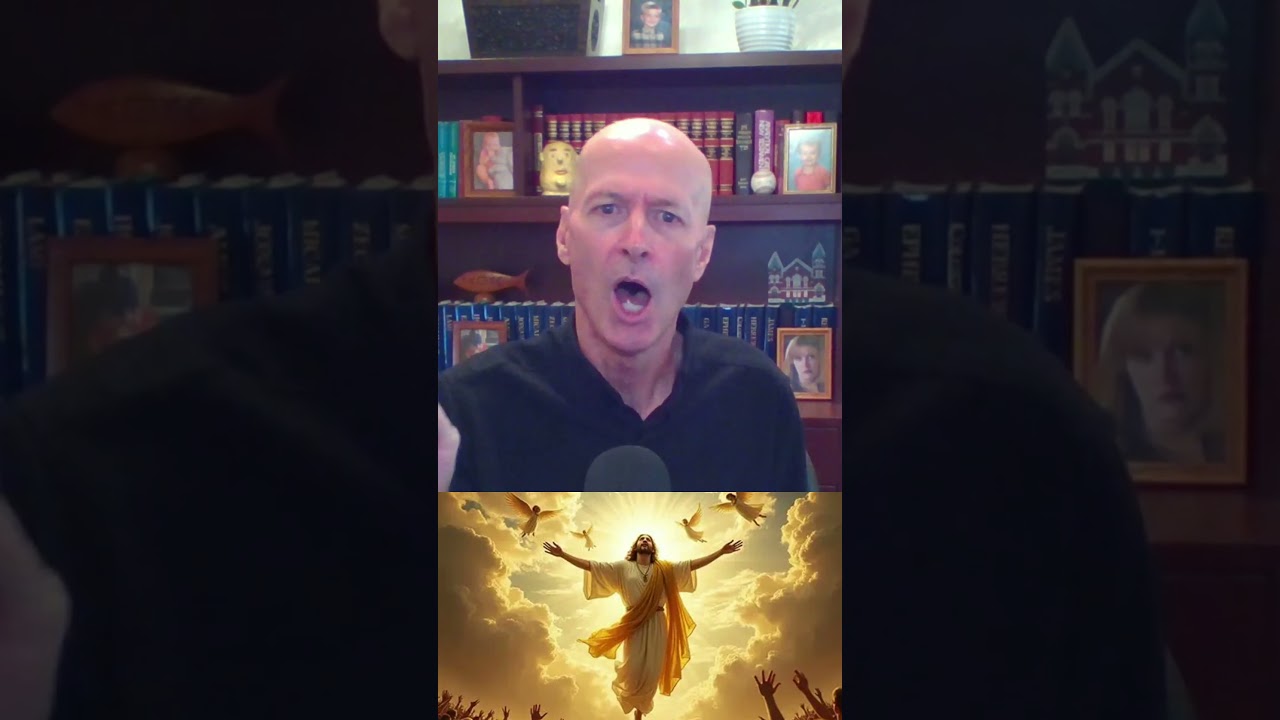
The Ascension is what locates that “something”, namely, the cross everywhere. The Ascension is the universal distribution of the cross into the lives of all. The three great events, the Cross, the Resurrection, and the Ascension are all centered in the image of God and what He has always been doing, His eternal celebration of, and widespread broadcast of, His crucified name and glory.
The Ascension. If the crucifixion is the victory and the resurrection is the celebration, then the Ascension is the coronation and universal distribution. This isn’t just Jesus going “up” to heaven in some spatial sense; it’s the cruciform God taking his rightful place at the center of all reality. The Ascension means that the cross isn’t confined to Jerusalem, AD 30. It’s everywhere, always, because it’s the very nature of the God who fills all things. Every atom of the universe now pulses with cruciform love.
What about the difference between life and death? What about the obvious polar opposites of Good Friday and Easter where Good Friday is about death and Easter is about life? The answer to that question is answered by the day in between, the Saturday of rest in between those two days. Jesus is in the grave, and he is dead as dead can be. Jesus is not undergoing decay. Death itself, if we were to personify it, is asking the question, what’s wrong here? This isn’t how death works because this isn’t how this has ever worked. When somebody dies, they begin to decay as I feast on them, announcing, one bite at a time, my victory over the life that was within them. What’s up with this Jesus guy?
This personification of Death as confused and frustrated is theologically brilliant. Holy Saturday—that often-ignored middle day—becomes the hinge upon which everything turns. Death has received its victim, but the victim won’t cooperate. The body lies there, genuinely dead, yet something is fundamentally wrong from Death’s perspective. Death has always worked the same way: consume, decay, reduce, eliminate. But this body resists. Not through some supernatural force field, but through something more subtle and more devastating to Death’s reign: incorruptibility. Jesus doesn’t cheat death by avoiding it; he breaks death by being utterly subject to it while remaining somehow indigestible.
In the midst of death, that is, in the midst of death’s stronghold, the place where death lives, death is not winning, and death himself knows it. Death is dead. It can’t even eat. So, if you were to ask, is Jesus alive or dead? you have asked an either-or question that falls short of what both Good Friday and Easter mean. The way in which Jesus conquers death is by announcing that death and life are the same to him.
The victory over death isn’t achieved by life defeating death in some cosmic battle where two opposing forces clash until one emerges victorious. Instead, Jesus collapses the distinction altogether. He demonstrates that death and life are, in God’s hands, the same substance. This means that death has lost its power to separate, to terminate, to have the final word. When God can be dead and alive simultaneously, when his life is expressed precisely through his death, then death has been rendered meaningless as a boundary.
The life of God is filled with pierced wrists and ankles and a pierced side, the hallmarks of someone who has been killed. The life of God looks like the death of a man. In Psalm 139 King David wrote that lightness and dark are the same to God. Life and death are the same to God, just as riches and poverty and shame and honor.
The reference to Psalm 139 grounds this theology in Scripture’s own testimony that God transcends our polarities. David understood that darkness and light are equally illuminated to God—not that God can’t distinguish between them, but that neither limits his presence or activity. The ultimate polarity: life and death, shame and honor, heaven and hell, the Resurrection does and doesn’t erase the shame of crucifixion; it eternally unites it with heaven’s honor in the single person of the crucified-and-risen Christ.
Just before Jesus was arrested and went to the cross he prayed about this hour that had come upon him as if it was heaven’s glory. He had this prayer with his Father because the cross of Christ is Heaven’s glory. It is also tremendously shameful. It is earth’s dishonor. The cross bridges heaven and earth by bridging earth’s dishonor with heaven’s honor and painting them both the same blood-red color, the blood of God.
The cross becomes the ultimate meeting place—by eliminating the distance between heaven and earth, by revealing that God has always been present in earth’s lowest places. The blood that stains both heaven’s glory and earth’s shame makes them one reality. This is perhaps the most scandalous claim of Christianity: God’s glory looks like torture. God’s honor wears the face of humiliation.
Good Friday or Easter? And the answer is yes, both, because both are fundamentally and centrally about the crucifixion of God.
Refuse the either-or question because it’s based on a false premise. We don’t choose between death and life, cross and resurrection, shame and glory. We receive all of it as the single, unified, eternal event of God’s self-giving love. The three days are one day. The one event is God crucified, God dead, God risen—God eternally showing us who he has always been.